
The NORVI X1 is an ESP32-S3-based modular industrial controller for local Ethernet/Wi-Fi networks, RS-485 integration and expandable field I/O. It is a starting platform for custom machine monitoring, OEM automation and industrial IoT installations where cellular is not required. The CPU module contains the processor, communications and display; industrial sensor and actuator connections require compatible NORVI X expansion modules.
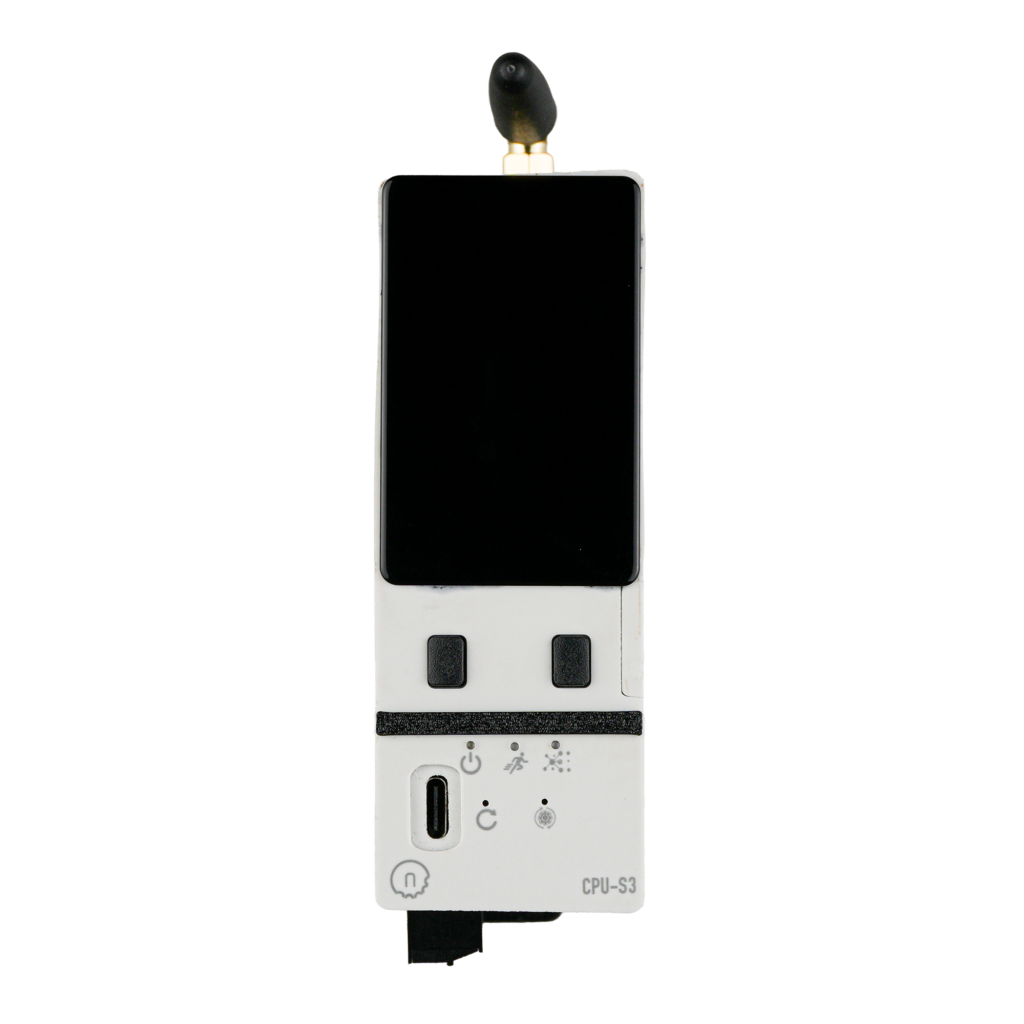
This guide explains what the NORVI X1 industrial controller actually includes, which modules to plan, and which engineering questions to resolve before ordering the CPU.
NORVI X1 hardware at a glance
| Item | Manufacturer-documented feature |
|---|---|
| Model | CPU-ESPS3-X1 |
| Processor | ESP32-S3-WROOM-1U-N16R2 |
| Memory | 16 MB flash, 512 KB SRAM, 2 MB PSRAM |
| Power | 24 V DC rated supply |
| Wired networking | Ethernet and RS-485 |
| Wireless | Wi-Fi 2.4 GHz and Bluetooth/BLE |
| Display | 2.0-inch 240 × 320 TFT touchscreen |
| Clock/storage | DS3231 RTC and microSD support |
| Mounting | DIN rail |
| Enclosure rating | IP20 (not a weatherproof field enclosure) |
| Field process I/O | Requires separate NORVI X expansion modules |
These specifications reflect the manufacturer’s X1 datasheet reviewed in November 2026. Check current document revisions and the actual delivered hardware before final design. The manufacturer states a maximum system expansion potential of up to 200 I/O points, but actual module combinations must be validated under bus, address, GPIO and electrical constraints.
When X1 makes sense
Machine monitoring on an established network
If a cabinet has approved Ethernet access, the X1 can be evaluated for collecting machine states, process measurements or other allowed field information and transmitting it to an authorized system. Avoid introducing a parallel controller into a safety or critical protective loop without proper engineering.
Custom OEM equipment
For an OEM that supports embedded firmware, the X1 provides a compact CPU platform with familiar ESP32 development options and industrial interfaces. The advantage is not merely the CPU: modular I/O lets engineers build different hardware sets around common firmware architecture. Document product revisions and firmware ownership if equipment will be supported for years.
Local operator information
The integrated touchscreen and RTC can support local status, event timestamps and diagnostic data in a suitably designed application. A touchscreen does not replace operator-safety controls or formal machine-state indication where standards require independent equipment.
What the X1 does not include: field I/O on the CPU alone
The X1’s CPU housing is not a bank of ready-to-wire 24 V sensor inputs and relay outputs. Field devices require compatible expansion modules. Examples of NORVI X module families include digital input modules, relay output modules, transistor outputs, 0–10 V and 4–20 mA analog input modules, analog output modules, and some temperature or communications interfaces. Check the NORVI USA product catalog for which modules are currently offered in the U.S.; do not infer that every manufacturer-listed module is stocked or available.
Practical distinction: An X-DI4 direct-GPIO input module may serve different signal-acquisition requirements than a shared-I²C X-DI8 module. Direct GPIO modules such as X-DI4, X-Q4 and X-UARTIO can contend for physical CPU resources. Most other modules share an I²C bus, where duplicate addresses must be prevented. See the NORVI X module selection checklist and PLC I/O list guide.
Ethernet, RS-485 and Wi-Fi are not the same thing
The X1 supports wired Ethernet, RS-485 serial communication and wireless connectivity, but communication hardware is only one layer of a working integration. Ethernet is a network medium; applications still need suitable IP configuration and protocol software. RS-485 is an electrical layer often used for Modbus RTU; a working Modbus transaction requires compatible software, register addresses, bus termination and matching communications settings. Wi-Fi requires an approved local network and a coverage test inside the actual enclosure.
For many cabinets, a wired link is easier to support. For a remote site where no local internet exists, evaluate the X1 versus X3 comparison and the X3 LTE controller, with carrier and antenna checks.
How to plan an X1 starter bill of materials
- One X1 CPU: CPU-ESPS3-X1.
- Compatible I/O: identify the exact digital/analog/relay module SKUs after a signal schedule and mixing review.
- Panel hardware: appropriately rated 24 V power supply, protection, DIN rail, enclosure, terminals, grounding and wiring.
- Networking: Ethernet drop or approved Wi-Fi infrastructure; RS-485 cable/termination if used.
- Commissioning: current firmware, I/O test plan, network recovery and safe restart behavior.
A published guide on the site also explains the NORVI X starter bill of materials in more detail.
Programming and firmware considerations
NORVI X uses an ESP32-S3 microcontroller, so firmware development can use supported ESP32 tooling and the manufacturer’s pin mappings. Do not assume an ordinary ESP32 example sketch maps directly to field hardware: display, storage, Ethernet, RS-485 and module interfaces consume specific pins and buses. Start with the exact manufacturer code examples, test inputs and outputs independently, log firmware versions and verify restart behavior. Our industrial ESP32 Arduino guide introduces the workflow.
Frequently asked questions
Does the NORVI X1 have LTE?
No. The X1 is the non-cellular NORVI X CPU. NORVI USA’s X3 option includes a Quectel EC25 LTE modem and requires service compatibility checks.
Can I connect a 4–20 mA sensor directly to the X1?
Use an appropriate compatible 4–20 mA input expansion module and its specified wiring. Do not connect industrial loop signals directly to generic MCU GPIO.
Is NORVI X1 an Allen-Bradley or Siemens drop-in replacement?
Do not treat it as one. Compare plant protocols, I/O modules, programming tools, timing, safety architecture and service requirements before changing a functioning control system.
Is the X1 suitable outdoors?
The manufacturer lists IP20 for the controller housing. Outdoor environments need an appropriately designed protective panel, power and thermal analysis.
Manufacturer technical references
Verify the official NORVI X1 CPU datasheet and NORVI X module compatibility guidance before specifying the final configuration. Those references describe hardware; NORVI USA lists U.S. products and pricing.
Review the actual product
View NORVI X1 specifications and U.S. ordering, then use the ESP32 PLC buyer’s guide to verify the design. If you need help pairing CPU and modules, send NORVI USA your I/O schedule.
Source note: CPU features taken from NORVI X1 manufacturer datasheet and NORVI X expansion guidance reviewed November 2026. Selection and documentation should be reconfirmed at purchase; technical documentation.